All Inclusive Price
TripAdvisor
Annapurna Region
16 days
Moderate
Trekking
4,130m
Max. 10 Pax
Hotel, Lodge & Tea House
All Standard Meals throughout the trip
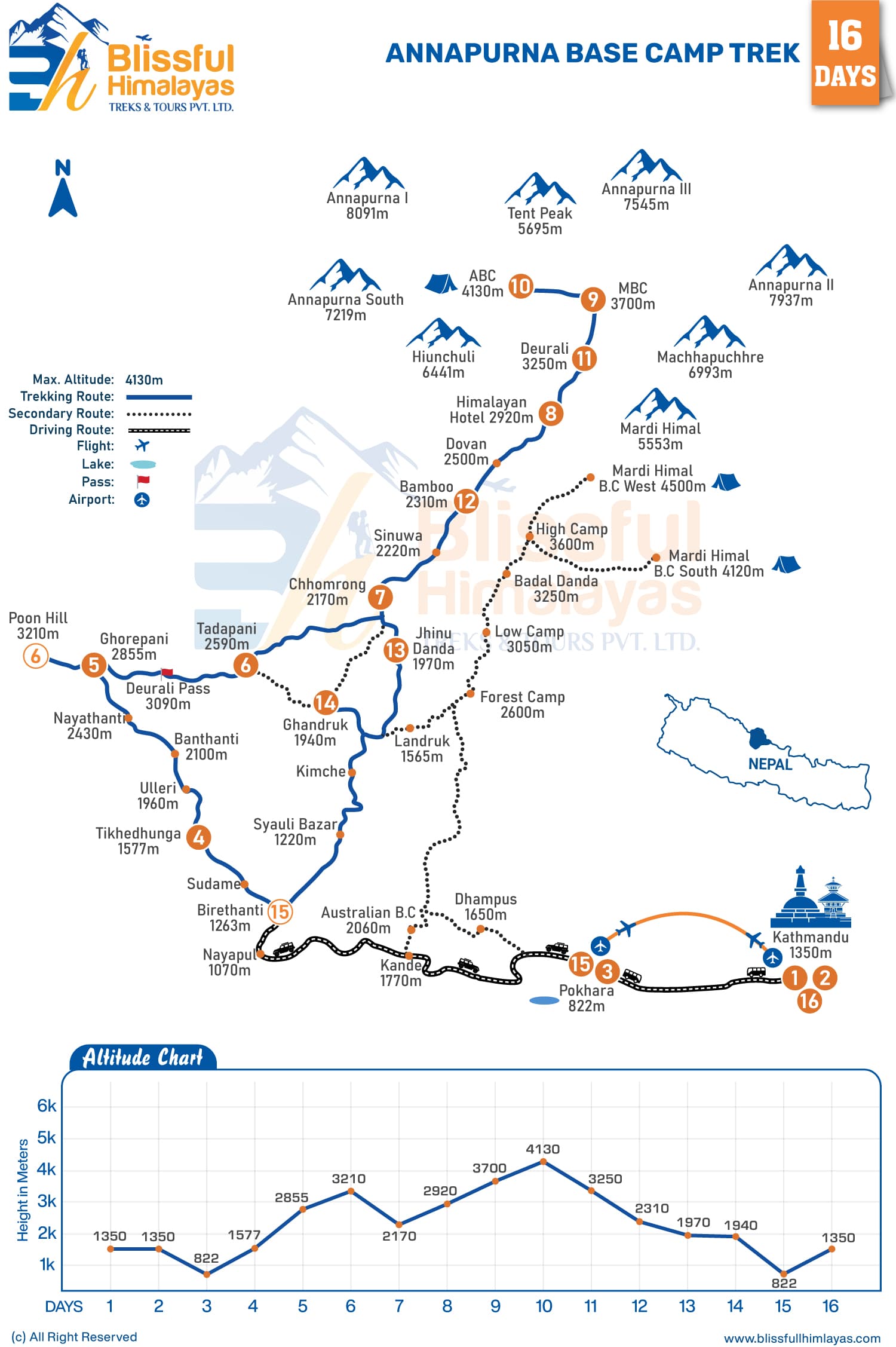
Reach Annapurna Base Camp (4,130m), standing inside a natural amphitheater of 7,000m and 8,000m peaks
Watch sunrise from Poon Hill (3,193m) over Annapurna, Dhaulagiri, and Machhapuchhre
Pass through genuine Gurung and Magar villages — Chhomrong, Ghandruk — not staged stops
Soak tired legs at Jhinu Danda's natural hot springs on the descent
See Annapurna I (8,091m) and Dhaulagiri I (8,167m) up close, two of the world's fourteen 8,000m peaks
Stand at Machhapuchhre Base Camp (3,700m) beneath the sacred, unclimbed Fishtail peak
Spot gray-faced langur monkeys and alpine flora through the Annapurna Conservation Area's forest zones
A genuinely gradual acclimatization profile — this route doesn't push past 4,130m, well below the altitude where serious AMS risk sharpens
If your schedule is tighter, the Annapurna Ghorepani Poon Hill Trek or Mardi Himal Trek cover similar terrain in less time
Our itinerary follows a proven schedule designed for optimal acclimatization and success. All itineraries are flexible and may be adjusted based on weather conditions and team performance.
Nepal has required a licensed guide for all foreign trekkers in conservation areas like Annapurna since April 2023 — this is current regulation, not a safety suggestion.
Particularly the climb to Ulleri and Ghorepani on Day 5 — pace yourself rather than treating this as a routine walking day.
Expect basic teahouses, limited power, and paid Wi-Fi that becomes unreliable at higher elevations.
This comprehensive equipment list covers everything you'll need for your trip.
Choose your preferred departure and continue to secure checkout.
Year
Month

Find answers to common questions about this package. Don't see your question? Contact us anytime.
Share your experience and help other adventurers make informed decisions.
All Inclusive Price
TripAdvisor
Increasingly so at higher elevations — budget accordingly.
The repeated elevation gain and loss through the first week is doing real acclimatization work, not adding unnecessary distance.